Recently, discussions regarding the issue of “formamide” in baby diapers have touched the hearts of many families. The European Union classifies formamide as a “Category 1B reproductive toxicant.” The so-called Category 1B refers to substances that “based on evidence from animal experiments, are believed to possibly cause damage to human reproductive functions or embryo development.” China has also listed formamide in the Inventory of Prohibited Ingredients for Cosmetics.
Objectively speaking, formamide is not an essential raw material for diaper production. The mainstream petroleum-based PP (polypropylene) non-woven fabrics on the market are themselves highly mature and reliable raw materials for hygiene products. Currently, public concerns and controversies focus more on the complex post-processing stages, such as the “unknown chemical residues” that might be introduced during processes like adhesive lamination , fabric softening, and high-temperature foaming.
Infants and young children belong to a group that requires special protection.
At a time when all parties were at a stalemate, the State Administration for Market Regulation, the Ministry of Industry and Information Technology, the National Health Commission, and the National Disease Control and Prevention Administration decisively formed a joint investigation team to comprehensively verify related issues. Looking at the testing disputes from multiple sides, everyone’s anxiety is actually quite simple: for things used close to a baby’s skin, can there be less chemical residue and more peace of mind?
Therefore, returning to the product itself, is it possible to make subtractions from the source, so that the material itself comes with a “safety gene”?
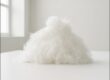
Polylactic Acid (PLA) Fiber
Relying on the natural advantages of biological materials, it minimizes chemical intervention to the greatest extent, allowing the product to return to pure safety.
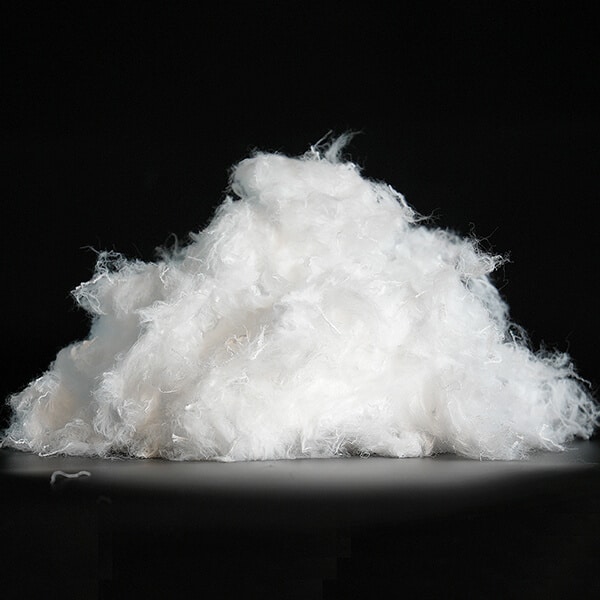
What are the unique advantages of applying PLA fibers in disposable hygiene materials?
01. Adhesive-free self-bonding, reducing chemical residues
The PLA bicomponent fiber of eSUN adopts a 100% pure PLA sheath-core composite structure; the sheath layer is low-melting-point PLA, and the core layer is high-melting-point PLA.
After this fiber undergoes heat treatment, a portion of the sheath layer melts to play a bonding role, while the rest maintains its fibrous state. The fibers connect with each other, thus forming a non-woven fabric structure without the use of adhesives.
Because no chemical adhesives are used, it avoids the introduction of external allergens and irritants, maintaining a purely natural advantage.
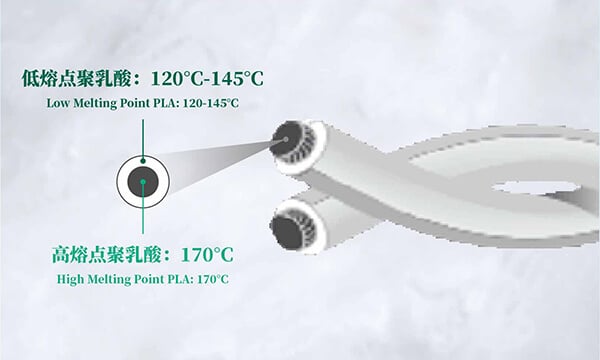
*PLA bicomponent fibers have high practicality. They can be used not only as a professional thermal bonding base material but also directly molded and applied to various disposable maternal and infant hygiene products, ensuring clean, pure, and skin-safe fabrics from the process source.
02. Excellent biocompatibility, skin-friendly, hypoallergenic, and more reassuring
The raw materials of PLA fibers come from renewable plant resources, and the material is naturally mild. Its core component—polylactic acid—is an endogenous substance in the human body, which rarely causes allergies upon contact with the skin, making it inherently suitable for close-to-skin application scenarios.
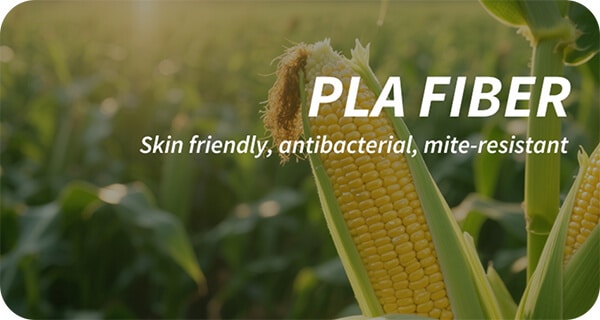
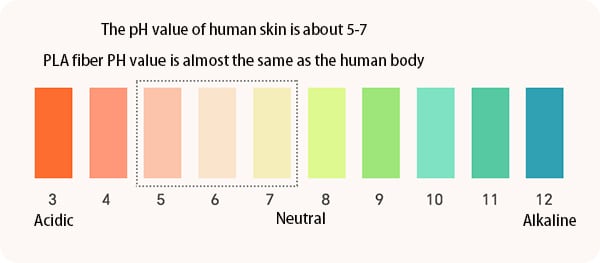
03. Weakly acidic to fit the skin, bidding farewell to diaper rash (“red bottoms”)
The pH value of PLA fibers is almost identical to that of the skin, making it mild and non-irritating. When applied to disposable hygiene products, it is not prone to causing stuffy redness, allergies, or “red bottom” (diaper rash) problems.
PLA fibers have uniform pores, which can quickly lock in moisture, efficiently conduct moisture, and provide breathable ventilation to dissipate dampness. This bids farewell to “stuffiness, dampness, and stickiness,” keeping babies’ little bottoms dry for a long time, and comprehensively meets the close-to-skin application needs of infants in terms of touch, skin feel, and user experience.
04. Naturally antibacterial, comes with built-in sanitary protection
Without the need for additional additives, PLA fibers can create a weakly acidic environment unsuitable for bacterial breeding through the slow release of trace amounts of lactic acid on the surface, naturally providing antibacterial, anti-mildew, and deodorizing effects.
In the humid and enclosed usage scenarios of diapers, it can significantly reduce the risk of bacterial breeding, decrease hidden dangers of skin infections, and provide babies with cleaner, close-to-skin protection.
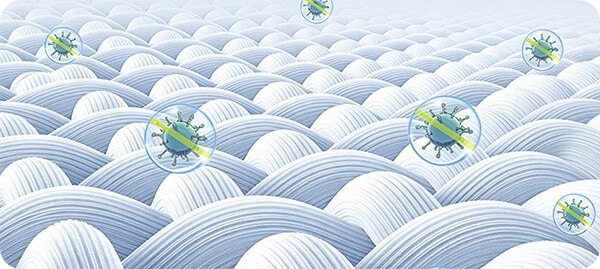
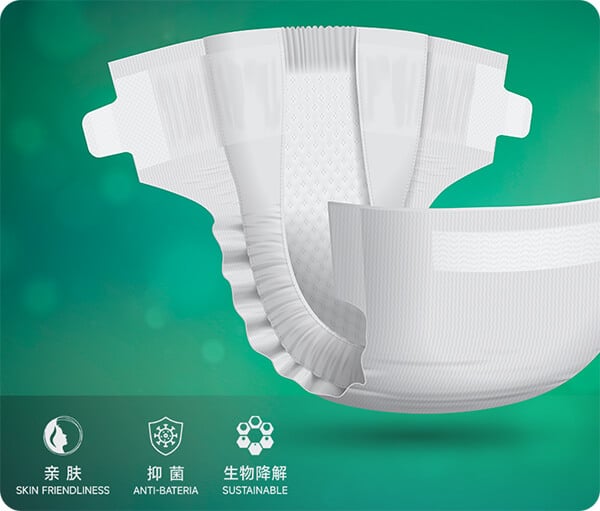
From “reducing hidden dangers” to “active protection,” PLA fiber non-woven fabrics are bringing a newly upgraded, high-quality experience to maternal and infant hygiene materials.
eSUN is deeply engaged in the intelligent research, development, and manufacturing of PLA fibers and non-woven fabrics. Relying on its independent core patented technology of melt direct spinning, it has launched a full series of PLA non-woven fabric solutions suitable for diaper top sheets, acquisition distribution layers (ADL), and skin-friendly surface layers. Through material innovation and adhesive-free molding processes, it provides a safer and more reliable raw material choice for maternal and infant hygiene materials.