
When polylactic acid (PLA) has developed a large-scale market in the field of 3D printing, where lies its greater room for imagination? The answer points directly to textile fibers.
Based on the new development stage, developing new bio-based materials and promoting the green circulation of the entire textile industry chain have become the core directions of industrial development. The national “15th Five-Year Plan” outline lists biomanufacturing as a future industrial direction for forward-looking layout, explicitly promoting biomanufacturing to become a new economic growth point. As the EU’s plastic ban continues to tighten, the global substitution of petroleum-based products with bio-based materials is accelerating. As a bio-based material that is naturally antibacterial and anti-mite, fully degradable after disposal, and produces no microplastics, polylactic acid is ushering in an important window of development.
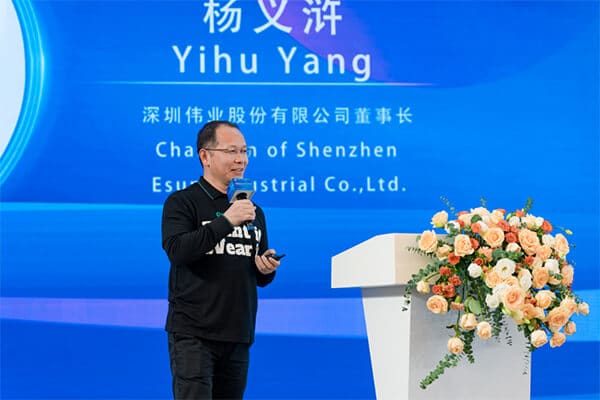
However, the industry’s big opportunities always belong to those who make early layouts. From his industry predictions in the 1990s while working at the Hubei Provincial Department of Petrochemical Industry, to seizing the open-source wave of 3D printing in 2006 to become the world’s first enterprise to commercialize PLA 3D printing filaments, and then to laying out polylactic acid fibers in 2023, overcoming industry bottlenecks such as strength degradation and heat resistance… Yang Yihu has spent more than twenty years proving that the long-term value of an industry is worth exploring with half a lifetime. Facing the future, his judgment is clear and firm: after 3D printing, fiber will be the next big trend for polylactic acid, and also a more explosive main battlefield.
Why choose polylactic acid? An industry prediction from over twenty years ago
Yang Yihu’s judgment on polylactic acid began in the late 1990s. At that time, he worked at the Hubei Provincial Department of Petrochemical Industry. The province had only phosphorus ore and rock salt resources, but lacked coal and oil, making the ceiling for traditional heavy chemical industries clearly visible. Meanwhile, as renewable green raw materials, he acutely realized that biochemicals represented a longer path.
At that time, there were only four 5,000-ton lactic acid factories nationwide, and their products were only used as additives in yogurt and the like, representing an extremely small market volume. However, while reviewing overseas literature, he discovered a signal that would change the trajectory of the next twenty years: the ultimate value of lactic acid lies in polymerizing it to produce polylactic acid. In 2001, Yang Yihu went to Shenzhen to start a business, and in 2002, he founded eSUN. He successively invested 1.2 million RMB to acquire the PLA medical synthesis patent from an academician team at Wuhan University, opening up the path of exploration in the field of polylactic acid.
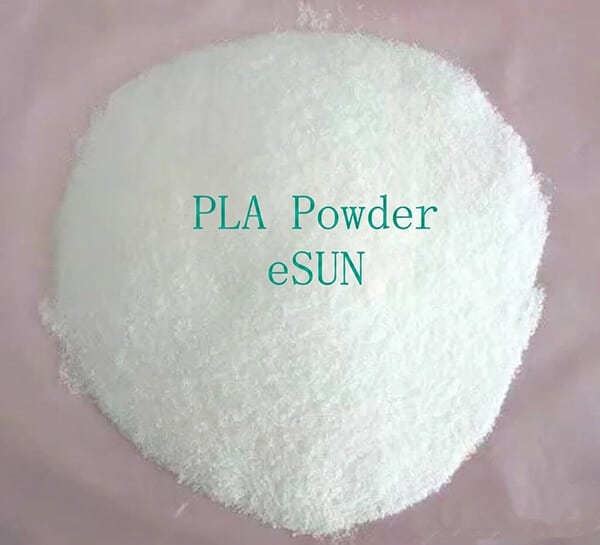
In 2006, Yang Yihu flew to Jiaxing carrying a bag of white pellets to cooperate with the team that first attempted PLA fibers in China. “The fiber was pulled out, sent into the dyeing process, and when fished out, the entire thread broke like a snapped piece of chalk. The textile supply chain is interlinked, and we couldn’t even push open the first door upstream. When making disposable degradable packaging, the price was undercut by petroleum-based products,” Yang Yihu said. After two setbacks, he made up his mind: not to compete head-on with petroleum-based products, but to prioritize exploring mature European and American markets.
During the same period, it coincided with the expiration of some original patents for FDM 3D printing technology, and the global open-source DIY wave erupted. “At that time, someone asked me if we could make PLA filaments. We tried and succeeded; they were dimensionally stable, without warping or cracking, as if tailor-made for this technology. We quoted 200 RMB/kg, and the customers placed orders without hesitation,” Yang Yihu said. For over a decade after that, he successfully navigated this path of 3D printing. The global consumption of polylactic acid in the 3D printing field is estimated to be 50,000-60,000 tons in 2025, of which eSUN alone will ship over 10,000 tons, firmly standing in the leading tier of this field. After gaining a firm foothold in the 3D printing field, the company has also continued to accumulate experience in the fields of biomedicine and disposable degradable products. But the seed of fiber had always been in his heart.
Why specifically fiber? A strategic move after long-term exploration
Entering the fiber field was not a temporary decision by Yang Yihu, but an inevitable move after nearly twenty years of groundwork. “Although the fiber industry has a long supply chain, it will definitely explode within three to five years,” Yang Yihu judged. Therefore, eSUN established a “two wings flying together” strategy: 3D printing is the cash flow pillar, and polylactic acid fiber is the second growth curve.
The trial and error with fiber in 2006 made Yang Yihu profoundly realize that for PLA to enter the textile field, it must simultaneously meet three conditions: mature material modification technology, well-coordinated supply chains, and sufficient end-market acceptance. For more than a decade after that, while conquering the problems of rapid strength degradation and poor heat resistance of polylactic acid, he also accumulated channels and brand recognition in the global market through 3D printing, preparing for the return to fiber.
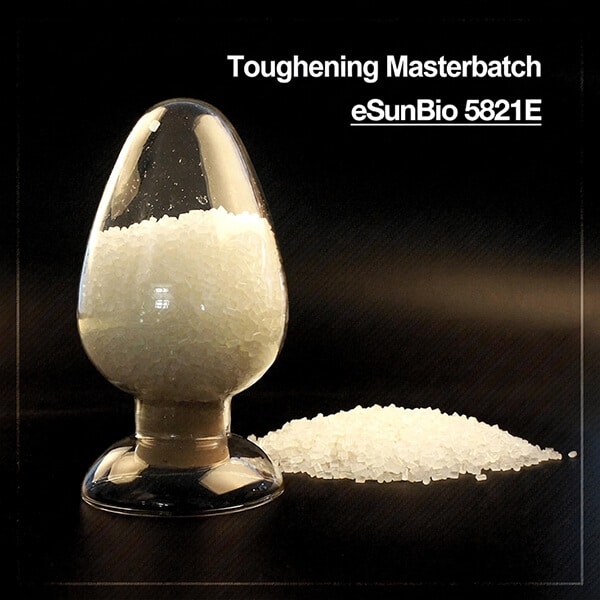
A household dryer temperature above 55°C or fabric dyeing above 120°C would cause PLA fibers to shrink and experience a cliff-like drop in strength. Yang Yihu’s solution centered around two major modification directions: toughening and heat resistance—which were precisely the core capabilities accumulated during the research and development phase of 3D printing filaments. Through systematic methods such as molecular design, blending modification, nanocompositing, and cross-linking technology, they conquered the problems of strength degradation, dyeing, heat resistance, and softness one by one. They achieved precise controllability of the degradation cycle, reached a color fastness of level 4 to 5, and stably adapted to ironing and drying.
“The problems solved in 3D printing are now being turned back to solve the problems in fiber; this is technological compound interest,” Yang Yihu said. In addition to technological breakthroughs, the health attributes and performance advantages inherent in polylactic acid fibers also constitute their irreplaceable market value. “PLA has natural antibacterial properties, prevents mildew and odor, is homologous with human lactic acid, and has a pH value that fits the skin. To a certain extent, it can regulate human body temperature, humidity, and acid-base balance. The fabric is very skin-friendly, with good drapability, smoothness, breathability, and gloss. It is highly adaptable for mothers and infants, as well as those with sensitive skin—an advantage that polyester cannot replicate.” Yang Yihu emphasized that the use of polylactic acid materials in the textile field is not only about environmental protection but also a necessity for health.
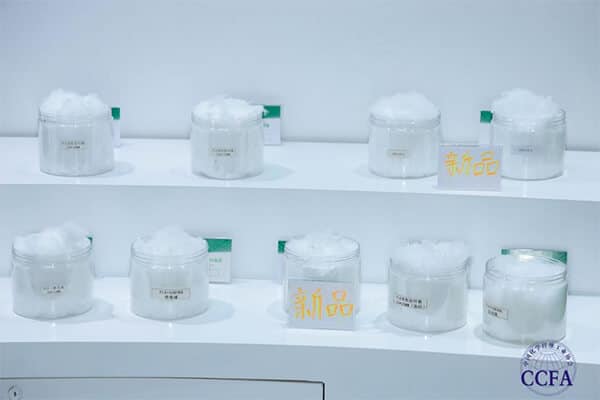
In terms of production capacity, eSUN possesses an industry-leading 10,000-ton level PLA melt direct spinning production line. Traditional chip spinning requires lactide to be polymerized, cooled, and pelletized, then remelted during spinning, consuming energy twice. In eSUN’s process, the melt is directly fed into the spinning box after polymerization is completed, omitting intermediate steps and directly reducing energy consumption by 30%. This technology was included in the National Key Research and Development Program and won the first prize of the China National Textile and Apparel Council Science and Technology Award in 2023. Currently, the company’s total designed plant capacity is 30,000 tons; the first phase of 15,000 tons has already been put into production, and all capacity will be completed within the next two years.
“At present, the global brand and channel landscape of the 3D printing track has solidified, making it very difficult for new enterprises to enter,” Yang Yihu pointed out. “The fiber industry is precisely the next definitive big trend for the PLA industry—a super market capable of accommodating a much larger volume.”
How to achieve scale and marketization? An increasingly clear path to a breakthrough
Once technology and capacity are in place, the real challenge is large-scale mass production and market application.
Yang Yihu knows deeply that the textile supply chain, from fibers to terminal clothing, is extremely long, and a single enterprise cannot leverage it alone. His approach is: promote scale through supply chain alliance coordination, drive industrialization implementation through standard construction, and solve cost and raw material issues through a closed recycling loop.
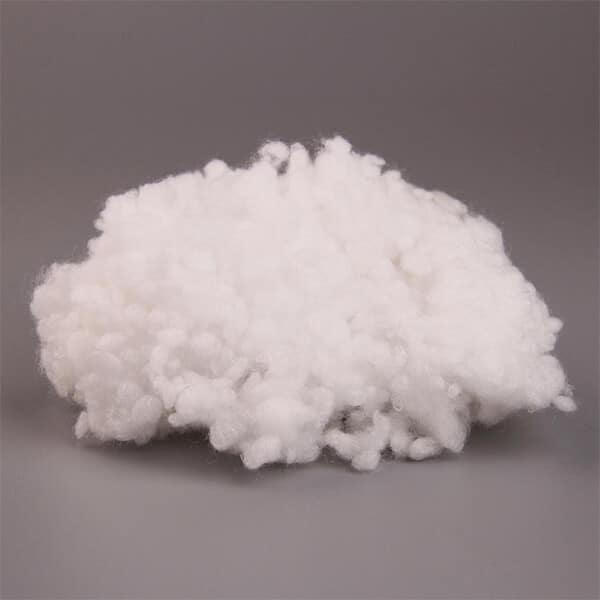
Currently, eSUN can mass-produce full-specification staple fibers from 0.9D to 6D, which can be blended with cotton, modal, Tencel, and hemp. However, Yang Yihu is not rushing into comprehensive distribution; instead, he hopes to rely on industry associations to build a collaborative platform, linking yarns, dyeing and finishing, fabrics, and brands for joint verification and iteration. In the short term, the priority layout focuses on three major tracks: maternal and infant fillings, close-fitting underwear, and sports quick-dry apparel, using small batches to ensure quality before scaling up once mature. At the same time, standard construction is advancing simultaneously; every link from raw materials to end products requires quantifiable standards to ensure consistent quality—this is the crucial leap from “able to make it” to “able to use it on a large scale.”
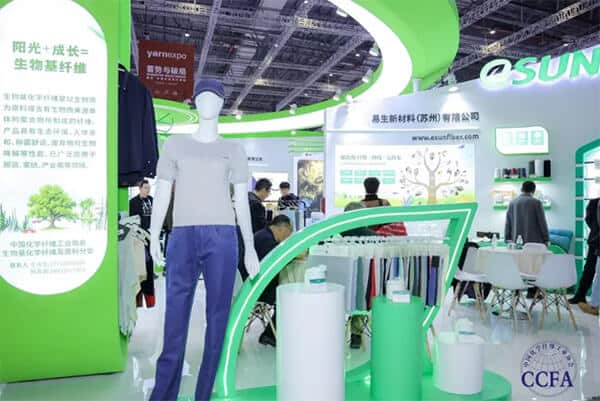
After large-scale volume expansion, where will the raw materials come from? “If PLA only follows the linear path of ‘extraction-use-degradation’, it will forever be constrained by grain costs; only by taking the circular path of ‘recycling-regeneration-reuse’ can the problem be fundamentally solved.” Yang Yihu’s recycling layout actually started more than a decade ago. In 2013, the company built a pilot recycling line in Xiaogan, Hubei, with a current pilot capacity of about 3,000 tons, and plans to build a 30,000-ton recycling facility in a coastal area. As PLA is a single monomer, thermal cracking can reduce it to high-purity lactide, which connects directly to the melt direct spinning production line, forming a complete closed loop. “The procurement cost of waste materials is low. With scale in recycling, the cost of PLA fibers will continue to drop, drastically narrowing the price gap with polyester. When being green no longer requires consumers to pay a premium, true large-scale application will arrive.”
So, is the time right now? “The industrialization of polylactic acid fibers follows a growth curve similar to that of 3D printing. A complete twenty-year introduction phase has just concluded. Today, all conditions—including mature technology, ready capacity, initiated supply chain coordination, and advanced standard construction—are in place, and it has stepped into the growth phase. Accelerating volume expansion will occur in 2027, and by 2030, the total domestic demand for PLA fibers will usher in greater growth space.” Yang Yihu judges: polylactic acid fibers have already reached a critical point in the apparel field.
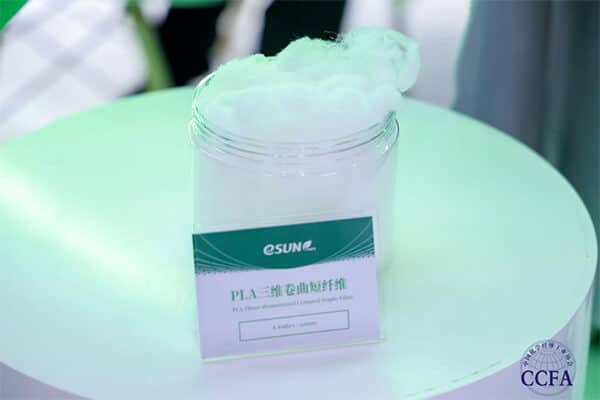
“This is not a comprehensive replacement of polyester, but a differentiated green penetration.” Yang Yihu believes that in ten years, traditional chemical fiber factories may also be equipped with PLA production lines, forming a new pattern where polyester and bio-based fibers run in parallel. Facing the “15th Five-Year Plan”, eSUN has clear goals: first, complete the 30,000-ton production line; in the medium to long term, strive to reach a total capacity of 100,000 tons while simultaneously expanding recycling facilities.
“To let healthy, comfortable, and low-carbon bio-based materials enter millions of households.” This was Yang Yihu’s original intention when he entered the polylactic acid field more than twenty years ago, and it is also the destination of leading his enterprise all the way from 3D printing to the fiber sector—twenty years is not short, but for an industry that is about to explode, the story has just begun.